RTIF application round 2026-2027
RTIF is currently closed for applications.
Please continue to return to this page for any updates and future funding opportunities.
The Scottish Government established the Rural Tourism Infrastructure Fund (RTIF) in 2018. We manage the fund, on its behalf.
The fund aims to improve the visitor experience in rural parts of Scotland that are experiencing visitor management issues as a result of additional visitors. In particular, it aims to help address pressure on local infrastructure or any negative impacts on communities. It does this by:
Since its inception, across seven rounds of RTIF, £24.5 million of grant funding has been awarded to 86 projects across rural Scotland and RTIF has helped to leverage more than £20.6 million in additional funding for these rural areas.
Read the responsible tourism strategy for a sustainable future.
Browse the priorities and actions to achieve a wellbeing economy in Scotland.
RTIF is currently closed for applications.
Please continue to return to this page for any updates and future funding opportunities.
The fund exists to support the delivery of more responsible tourism actions. It helps to leverage additional investment for rural areas facing increased visitor demand. It stimulates collaboration in these areas to address climate change as Scotland transitions to a low carbon economy.
Funding is focused on developing infrastructure to improve visitor management, such as:
The fund does not support revenue activity such as the provision of rangers services, marketing, maintenance etc.
Contact our team with queriesThis includes projects in Fife, Loch Lomond, Trossachs, Stirling & Forth Valley, and Perthshire.
Loch Lomond & Trossachs National Park Authority. £750,000.
The project includes additional car parking with sustainable transport connections and improved access to the loch for cruises and waterbus users.
The improvements support a better visitor experience for all and create employment opportunities and business development for local outlets.
They will also reduce pressure at Luss by providing high-quality facilities for visitors at another accessible location on the western shores of Loch Lomond.
Stirling Council. £231,000.
The final stage of the previously supported round 3 Trossachs Visitor Management Project, features a high-quality landmark viewpoint at the busy Trossachs Pier visitor hub.
This project involves the construction of a three-level scenic tower with boardwalk and bridge links to two new scenic lookouts at the historic Roderick Dhu Tower Viewpoint overlooking Loch Katrine, immediately above Trossachs Pier.
The viewpoint will provide a more accessible vantage point overlooking the Loch for those unable to climb the surrounding mountains and help with the management of visitors around the Trossachs Pier site.
Stirling Council. £286,821.
Building upon the initial investment and RTIF funding of the "Doune Tourism Development" projects this phase will focus on the development of wider travel infrastructure, including:
The project will deliver approximately 42 parking spaces in total for cars, accessible parking spaces (four), motorhomes / minibuses (five), motorbikes, cycles* and Electrical Vehicle charging point spaces (four)*.
The project will also deliver new car park lighting, approximately 265 metres of new pathways and associated signage and wayfinding to enhance connectivity to the village and local visitor attractions and businesses.
Perth & Kinross Council and Scottish Canoe Association. £375,000.
The Grandtully Visitor Management Project aims to tackle the severe visitor management pressures that have been experienced on the River Tay in the last few years by:
Fife Council. £375,000.
Partnership project between Fife Council and Fife Countryside Trust to provide a network of parking, toilets, interpretative and renewable energy points for EV and EB charging serving the Fife Coastal path, the Pilgrims Way and Fife 191 driving route.
The project will deliver new facilities in locations such as Elie, Pittenweem, Kinghorn, Craigmead and Glenvale.
Clackmannanshire Council. £139,268.
Proposal to relieve the visitor parking pressure at Dumyat access points by moving the access point to Menstrie, including upgrading and expanding of car park at Dumyat Community Centre, provision of tourist information on trails, motorhome service point and EV points.
Perth & Kinross Council. £302,864.
A partnership project between Perth & Kinross Council and RSPB Scotland at the RSPB Reserve at Loch Leven.
The Reserve has become a hub for the Loch Leven Heritage Trail and the Sleeping Giant Path which connects the Reserve with Lochore Meadows Country Park resulting in visitors number increasing from 50,000 to 200,000 per annum.
The project will enlarge the car park to create an additional 100 car parking spaces, provide six twin EV charging points, and new toilets including a changing places facility.
Perth & Kinross Council. £235,737.
New toilet facilities at Aberfeldy to service the walking and cycling users on the River Tay Way from Perth to Kenmore and waste disposal facilities for the motorhome sector.
Loch Lomond & The Trossachs National Park Authority. £375,000.
A partnership project between the Loch Lomond & Trossachs National Park, SS Sir Walter Scott Trust and Forestry and Land Scotland. The project will address a number of the issues seen over the past few years with increasing visitor pressure in the Trossachs.
Activity will include additional motorhome, car parking and cyclist provision at Trossachs Pier, Ben A'an and Stronachlachar. Provision of new toilet facilities at Trossachs Pier and improved signage and orientation provision to manage visitors through the Trossachs.
Stirling Council. £286,362.
A partnership between Historic Environment Scotland, Stirling Council and the local community to address issues arising from the growth in visitor numbers at Doune Castle.
Includes refurbishment of the village toilets, extensions to the path network between the Castle and village, signage and interpretation.
Loch Lomond & The Trossachs National Park Authority. £136,000.
Infrastructure improvement to Balmaha Visitor Centre to enhance the quantity and quality of the toilet and litter provision to alleviate the tourism volume pressure on East Loch Lomond at Balmaha and Milarrochy Bay.
Loch Lomond & The Trossachs National Park Authority. £281,000.
Package of improvements to relieve visitor pressure at Luss and redirect toilet stop traffic to locations further up the west of Loch Lomond at Tarbet and Inveruglas as well as improvements to the toilets at Luss to increase accessibility.
This includes projects in the Highlands (islands) Orkney, the Outer Hebrides, and Shetland.
Orkney Islands Council. £750,000.
A visitor hub in Dounby that serves the needs of both tourism and the local community will be developed to reduce pressure on key natural and cultural heritage sites and improve the visitor experience. Crucially, it will also deliver socio-economic benefits to local businesses and communities.
The project will provide:
Comhairle Nan Eilean Siar. £85,553.
There are currently no motorhome sites around the main village or ferry port at Tarbert which leads to informal camping, in readiness for early morning sailings.
It's hoped that provision of a new site, within walking distance of the ferry terminal, will deter visiting vans away from the unofficial stopping spots that are emerging and provide a better experience for the visitor and the local community.
This project will develop six overnight motorhome bays with electric hookups and grey water disposal point just outside Tarbert to help deal with the increase in campervans and motorhomes arriving on the island.
Highland Council and Camuscross & Duisdale Initiative. £111,020.
This project will provide five motorhome bays and service point at the An Crùbh the community owned Hub at Duisdale, Sleat, Skye.
This will include hook-ups, water and CWD facilities which will complement exisitng provision at the centre of a shop, café, existing electric vehicle charging points, toilets and showers and full disabled access.
Highland Council, Isle of Canna Community Development Trust / NTS. £230,000.
This project will see the construction of a 68 m² building close to Canna Pier and harbour to provide fully accessible modern welfare facilities for the 10,000 - 15,000 annual visitors to Canna.
The building will incorporate toilets, showers and a small laundry. It would also function as a reception and orientation point and a base for the NTS Ranger to allow them to meet passengers off the ferry and give directions, information and guidance on wildlife, sites and facilities.
Highland Council and Kilmuir Community Trust. £133,875.
This project will develop visitor facilities at Kilmuir Village Hall, in north Skye to provide two electric vehicle charging points, eight new parking spaces CWD, and publicly accessible toilets and recycling bins.
The project proposes to install PV panels to help generate electricity for the project, whilst reducing the potential carbon impact.
Highland Council. £207,456.
New public toilets, realigned parking bays, 480-meter path linking the village to the parking and one waste disposal facility in a village which is popular with visitors and an increasing number of boat trips.
Highland Council. £151,343.
Phase Two of the Highland Council led Storr mountain footpath restoration project which would take visitors from the recently completed path work under Round Two of RTIF, up between the Old Man and the Needle to the junction of the Necklace path and then on to the Photographers Knoll paths.
This will complete the package of works including the soon to be completed toilets funded under Round One of RTIF and the new car park.
Orkney Islands Council. £260,000.
Infrastructure improvements at the Point of Ness Camping and Caravan Site to relieve ongoing visitor pressure. Includes the provision of new hard standing for campervans and caravans, upgrading and enhancement of the toilet and shower block and upgrading the chemical waste disposal facilities.
Shetland Islands Council. £375,000.
A partnership project between Shetland Islands Council and the Scalloway Community Development Company to plug a key gap in local provision of facilities for camping, caravans and motorhomes in Shetland, and meet the growing demand for motorhome facilities.
The development will include provision for 10 motorhome/caravan overnight bays with toilets and shower facilities, waste disposal and recycling points.
Highland Council. £273,628.
Addressing capacity and services provided in Eigg’s only visitor facilities at the pier centre creating four new toilets and showers, interpretation and signage.
Shetland Council, £286,300.
Address the erosion of peat caused by an increasing number of visitors to Britain’s most northerly NNR by making accessible the "Lighthouse Path" heritage route to Hermaness Hill with several sections of recycled plastic board walk.
Extending the boardwalk to the coast
Improving the overall visitor experience through improved parking, toilets, and interpretation at the carpark and at key points across the reserve.
Highland Council. £184,506.
There has been a significant increase in visitor numbers on the footpath to the Old Man of Storr on Skye. Highland Council will enhance visitor access while protecting iconic landscapes and internationally important habitats.
Highland Council. £300,000.
Expansion parking area and provision of motorhome facilities to cope with visitor demand at Portree. The project will create an extended hardstanding area in west Bayfield carpark, providing more parking spaces, day parking for motorhomes with waste and water facilities.
Highland Council. £64,997.
Green toilet facilities in a popular climbing and visitor site with improved and extended car parking, signage and information provision.
Shetland Islands Council. £131,660.
Parking hub to reduce the pressure from visitors and cruise coaches in the small village of Hoswick and improve the visitor experience and reduce pressure on the community.
Highland Council. £293,124.
New toilet and motorhome facilities at Storr to support walkers, cars, coaches and cyclists which will complement the car parking development already underway.
Comhairle nan Eilean Siar. £230,000.
A multi partner project to develop an Island wide network of facilities and infrastructure to improve the visitor experience including car parks, campervan service points, electrical hook up points and signage.
This includes projects in the Highlands (mainland).
Highland Council. £500,000. The Highland Council and Assynt Development Trust have a joint aim to redevelop and expand the Achmelvich beach car park and replace the current public toilets unit with a larger unit which incorporates toilet and shower facilities and modest space for tourist interpretation / education / good practice resources. The project was granted planning permission in November 2021, following an earlier RTIF-funded design phase. The project will provide:
Highland Council. £350,000. This new low-level active travel route will follow the A82 from Glencoe village into Glencoe National Nature Reserve and will directly connect with the popular National Cycle Network route 78 – the Caledonia Way. Project comprises of two elements: a new path to fix the missing link of 2km from Glencoe Visitor Centre to Signal Rock and a 2km upgrade to the existing path from A82 Glencoe Village to Glencoe Visitor Centre.
Highland Council. £243,218. Through the council’s Visitor Management Plan some small-scale improvements to public toilets and additional “Highland Comfort Scheme” provision along the North Coast 500 were undertaken in 2021. However, four of these council-managed sites in the North West of Sutherland are all older facilities that were considered to require further significant upgrades. This project aims to improve the facilities and accessibility at four sites – Lochinver, Scourie, Rhiconich and Kinlochbervie.
Highland Council. £440,859. The rapid rise in visitor numbers to the area over the last few years has had significant impacts on the everyday lives of local residents. This impact is not always compensated for by the benefits that tourism brings. The road infrastructure and visitor facilities at Stac Pollaidh have been stretched to breaking point, severely disrupting access to homes and businesses in the area, causing damage to roads and paths, and resulting in a poor visitor experience which reflects badly on Coigach and Assynt in general. The project will provide an 80-space car park and a public toilet with off grid processing tank.
Highland Council and FLS. £228,200. Visitor numbers have been steadily increasing in Glen Affric, increasing the pressure on the existing facilities with projected continued increase in visitor pressure due to a rise in staycations and motorhome touring. This project will increase the capacity of Dog Falls car park for larger vehicles, replace the aging and inefficent composting toilet, create a new section of path taking visiors off road and restore and upgrade the Dog Falls Bridge. The project will include the provision of cycle infrastructure and four e-bike charge points.
Highland Council and Dornoch Area CIC. £256,003.
Creation of a car and coach parking site which is 40m from the main square with 40 car parking spaces and three coach spaces to cope with increasing numbers of visitors and the increase in the cruise traffic from the nearby Invergordon terminal.
Highland Council and Gairloch Area Development Ltd. £147,364. This project will create a provision of new multi-purpose toilets and a motorhome servicing facility at the main Beach Car Park in Gairloch to cater for the increasing numbers of visitors to Gairloch and users of motorhomes travelling the North Coast 500 driving route.
Highland Council. £192,000. A partnership project between Highland Council and the Arnamurchan Lighthouse Trust to improve provision of the external free to access parts of the site in this remote peninsula. Works include improved car parking, paths, walkways and the creation of new viewpoints. The project will improve access and egress from the site and address safety concerns from the increasing numbers of visitors.
Highland Council. £340,000. Provision of new toilet facilities at Falls of Foyers within a low carbon, sustainable building that will replace a condemned toilet block and updated toilet facility and waste disposal facility at Invermoriston.
Highland Council. £321,750. A partnership project between Highland Council and the National Trust for Scotland. This project aims to address increasing visitor pressures in Glencoe through provision of an overarching plan for an improved visitor infrastructure along the A82. The project will improve car parking provision at the Three Sisters, paths and address visitor management issues with upgraded public toilets at Glencoe village.
Highland Council. £185,750. A partnership project between Highland Council and the National Trust for Scotland. This project aims to address increasing visitor pressures in Glen Etive through provision of an overarching plan for an improved visitor infrastructure along the A82. The project will improve car parking provision, signage and address visitor management issues.
Highland Council. £105,345. Phase Two proposal by Highland Council and Assynt Development Trust which will see the completion of the motorhome provision and waste disposal unit at this key location on the NC500.
Highland Council. £299,000.
There has been a 30% growth in the traffic on the Nigg-Cromarty Ferry. Highland Council and Cromarty Community Development Trust aim to provide campervan facilities including hard standing, waste disposal and toilets along with improved slipways for the Cromarty-Nigg ferry.
Highland Council. £57,456. Final phase of the Glenfinnan Viaduct project to create a footbridge and new path to link the new car park supported on Round 1 of the RTIF to the existing path to the viaduct preventing the need to walk up the main trunk road for access.
Highland Council. £300,000. Address the needs of increased visitor numbers and improve the visitor experience to Glen Nevis with a clear vehicle access strategy, installing public transport access facilities, parking, signage, paths and toilet facilities at Lower Steall Falls Car Park.
Highland Council. £73,757. Redevelopment of the current public conveniences and showers by the local community.
Highland Council. £269,382. Additional parking to cater for 100 cars and 10 motorhomes/buses in Glenfinnan attracted by the Harry Potter films to the viaduct and the steam train.
Highland Council. £129,325. Five enhanced viewpoints on the 11.5m stretch of the Lochcarron – Bealach na Ba road between Tornapress and Applecross with parking spaces for motorhomes.
Highland Council. £300,000. New toilet and motorhome service facilities at Mallaig and the refurbishment of the existing but disused toilets at Traigh Beach with improved signage and information.
Highland Council. £52,050. Provision waste disposal and fresh water supply facility for motorhomes/campervans in Lochinver.
This includes projects in Aberdeenshire, Dundee & Angus, and Moray Speyside.
Moray Council. £346,065.
A multi-partner and location approach to create a network of facilities across the region that will contribute to tourism and relieve pressure on local beauty spots including:
1. New motorhome overnight facility in Cullen and motorhome parking at Ballindalloch and Craigellachie
2. Upgrade and reopening of toilets in Findhorn and Ballindalloch
3. New carpark with footpath to the iconic Bow Fiddle Rock, Portknockie
4. Carpark enhancements at Ben Rinnes, Ballindalloch, Hopeman and Craigellachie
Aberdeenshire Council. £375,000.
Changing places toilet and parking provision at Aden Country Park as a result of increased visitor numbers. Increased power supply to the site will enable 8 EV charge points to be installed.
Aberdeenshire Council. £278,122.
Replacement of the current toilets owned by Aberdeenshire Council at Glenshee with new, fully accessible toilet facilities and showers with 24 hour / 365 days access for walkers, climbers and visitors on the Snow Roads Scenic Route and a gateway to Royal Deeside.
The project will also provide a grey and wastewater disposal point for motorhomes, new cycle facilities and an EB charge point.
Aberdeenshire Council. £154,701.
Phase one of a partnership project between Aberdeenshire Council and Newburgh and Ythan Community Trust SCIO.
It will upgrade and increase the capacity of the car park at Newburgh Links which is part of the National Nature Reserve covering the Ythan Estuary which has attracted increasing numbers of visitors to watch the seal colony established at the Links.
Aberdeenshire Council. £268,057.
A partnership project between Aberdeenshire Council and NatureScot to upgrade and expand the car parking at St Cyrus National Nature Reserve to provide an additional 40 parking spaces for cars and motorhomes to cope with increased visitor numbers at the site.
The project includes refurbishment of the toilets to include a changing places standard toilet, and provision of additional cycling racks, EV charge points and a chemical disposal point.
Moray Council. £80,500.
Provision of 34 new car and two coach parking spaces, toilets and seating area to address parking and infrastructure issues as a result of increased visitor numbers to the Abbey.
Cairngorms National Park. £184,098.
A new 1.1 kilometre path, linking four car parks, visitor attractions and accommodation will improve safety and access in a key visitor hotspot in the Cairngorms.
Cairngorms National Park.£60,000. Improvements to the car parking and toilet facilities and provide waste disposal facilities to address demand and prevent roadside parking.
This includes projects in Dumfries & Galloway, Edinburgh & the Lothians, and the Scottish Borders.
East Lothian Council. £197,026.50.
The project will enhance facilities at Yellowcraig, which has capacity to absorb visitors from other areas but which lacks adequate facilities at present to meet visitor needs.
The project will add a new changing places toilet, family changing, and accessible toilet facility to the existing block of toilets and outdoor showering facilities. A new tarmacked disabled mini bus parking and drop off area with four new 7 Kw EV charging points will be installed.
City of Edinburgh Council. £207, 886.
This project will develop and build accessible to all path links to Bonaly Country Park.
These have been identified as part of the Strategic Tourism Infrastructure Development Plan (STID) Pentland Hills Sustainable Access project which seeks to reduce cark parking requirements in the long term by providing accessible non vehicle links to the park.
The project will also formalise the existing car parking space, improve traffic flow, create and install new signage, install new cycle racks, a public bike pump and repair station and build two new Natsol toilets.
West Lothian Council. £167,707.
The council plan to take pressure off the increasing numbers using the Beecraigs Visitor Centre by
City of Edinburgh Council. £265,873.
This project aims to make improvements to the Flotterstone and Threipmuir Car Parks in the Pentland Hills Regional Park. It will deliver improvements to access, paths and provide up to 53 new car parking spaces, seven accessible car park spaces, bike repair facilities, and two zero discharge toilets.
City of Edinburgh Council. £298,861.
This project aims to make improvements to Harlaw Car Park in the Pentland Hills Regional Park. It will deliver improvements to access, paths and provide up to 33 new spaces and two zero discharge toilets.
East Lothian Council. £172,830.
Project by East Lothian Council to provide enhanced toilets and showering facilities at the popular Gullane Bents with a fully accessible changing places toilet improving access to the site for all.
East Lothian Council aim to encourage low carbon transport access to the site with emphasis on cycling and public transport.
East Lothian Council. £240,000.
The refurbishment of 3 toilet facilities at Longniddry Bents in East Lothian which has more than 600,000 visitors every year. The improvements planned include the installation of a fully accessible Changing Places toilet, outdoor showers and tourist information provision.
Dumfries & Galloway Council. £225,000.
Works include a 1.3 kilometre summit path to create a sustainable, durable and accessible route with improvements to the car park, signage and interpretation.
Scottish Borders Council. £93,403.
The project will deliver 4 kilometres of upland path improvements to improve the quality of the visitor experience and prevent erosion at this popular site.
Dumfries & Galloway Council. £58,000.
Refurbished toilets and improved access to the water’s edge. Recycling and disposal waste system at Clatteringshaws for visitors and mobile home users.
This includes projects in Argyll & The Isles, Ayrshire & Arran, and Greater Glasgow & the Clyde Valley.
Argyll & Bute Council. £332,334.
Forestry and Land Scotland will take forward the project in two phases, with the first phase encompassing three car park developments from Bridge of Orchy through the Glen Lochy area, which will have the greatest impact on managing campervan and car oversubscription.
The goal of these projects is to significantly ease parking issues in Glen Orchy, Glen Lochy and Bridge of Orchy as well as improving the quality of the visitor experience for these existing users.
The project will deliver increased car and motorhome parking, waste disposal facilities at two sites and 2.5km of path improvements linking the car parks to the surrounding area.
Renfrewshire Council. £169,165.
This project will help manage visitor pressure at the RSPB Lochwinnoch Nature Reserve which is resulting in disturbance and damage to wildlife as a result of unmanaged access to sensitive parts of the site by visitors.
The project will achieve this by creating a new boardwalk along a carefully designed route, with screening, which will ensure disturbance and damage to wildlife is reduced.
It will also enable better management of visitor access, both with current numbers and anticipated increased numbers in the future.
This accessible boardwalk will greatly enhance the visitor experience, by linking key wildlife and historic features and opening up a new section of the site to visitors, including those with specific access needs.
Argyll & Bute Council. £477,270.
This project aims to upgrade the existing visitor infrastructure on the Isle of Staffa in order to improve the visitor experience by reducing overcrowding and increasing visitor safety.
The project will enable National Trust for Scotland (NTS) and partners to sustainably welcome growing visitor numbers to Staffa, providing a world class visitor experience and protecting the unique landscape and wildlife visitors come to experience.
The project consists of the development of an upgraded and significantly larger boat landing jetty which will provide additional space for seating, a waiting area and improve visitor flow.
Argyll and Bute Council and South Islay Development. £302,990.
This will be phase one of the development of the Port Ellen playing fields site.
This project will increase motorhome electric hook up site capacity from four to 12 (an increase of eight spaces) to satisfy growing demand and entail an upgrade to the disposal site capability for chemical, black and greywaste.
In addition, a new shower, toilet and laundry facility will be provided, alongside much-needed recycling facilities.
Argyll & Bute Council. £201,000.
Provision of motorhome and camping facilities adjacent to the Gigha ferry terminal with recycling and waste facilities for motorhome users, toilets, showers and laundry facilities for visitors.
Argyll & Bute Council. £214,659.
This project will provide additional parking, motorhome hard standings, electric hook ups and waste disposal facilities to reduce visitor pressure at Ulva Ferry on Mull.
Argyll & Bute Council. £300,000.
An accessible all abilities pathway to link the accommodation and tourism businesses in Port Charlotte with the Bruichladdich businesses and Distillery and provide a safe route for non-vehicle traffic.
Argyll & Bute Council. £54,217.
Upgrade to the Columba Centre car park at Fionnphort to provide space for campervans and dedicated disabled parking.
The Skerryvore Lighthouse Shore Station Infrastructure Project has upgraded a nationally significant, community-owned heritage site on Tiree, improving access, visitor facilities, sustainability and long-term site management.
The project delivered enhanced car parking, including accessible spaces, a motorhome space, cycle racks, cycle repair stations, improved pathways, recycling facilities, low-energy lighting, hand dryers, signage, interpretation boards and landscaping. These improvements have created a safer, clearer and more welcoming experience for visitors, local residents and businesses.
The project strongly supports responsible and sustainable tourism by encouraging low-carbon travel, improving visitor management, protecting the fragile machair environment, reusing materials, reducing waste and strengthening Tiree’s heritage offer. It has also supported local contractors, community involvement and has received positive feedback from residents, businesses and visitors.
With improved infrastructure, maintenance arrangements and future monitoring in place, the site is now better equipped to welcome visitors, manage environmental pressures and provide lasting community benefit.
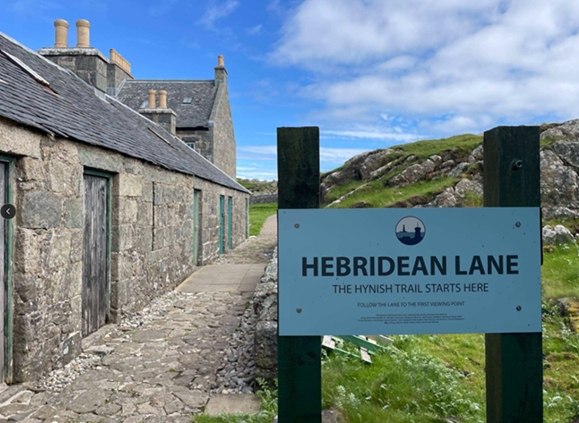
Hebridean Lane, Skerryvore Lighthouse Shore Station, Tiree. Credit: Hynish Trust / Argyll and Bute Council
Dounby Visitor Infrastructure is an Orkney Islands Council project funded through the Rural Tourism Infrastructure Fund. The project delivered new visitor facilities at Dounby which is a village on the Mainland in Orkney. It allowed them to strengthen Dounby’s role as a visitor hub and improve amenities for both residents and visitors.
The works included parking, accessible parking, motorhome and coach/bus provision, EV and e-bike charging, cycle racks, a toilet block, waste disposal facilities, a water refill point, all-ability paths, seating areas, landscaping, planting for nature, interpretation and wayfinding.
The project supports responsible tourism by improving year-round facilities, encouraging visitor dispersal across Orkney and reducing pressure on existing public spaces. It also contributes to net-zero aims through EV charging, e-bike charging, solar panels, LED lighting, water-saving fixtures, reuse of materials and biodiversity-focused planting.
Overall, the project has improved visitor infrastructure, accessibility, community space and sustainable travel facilities.
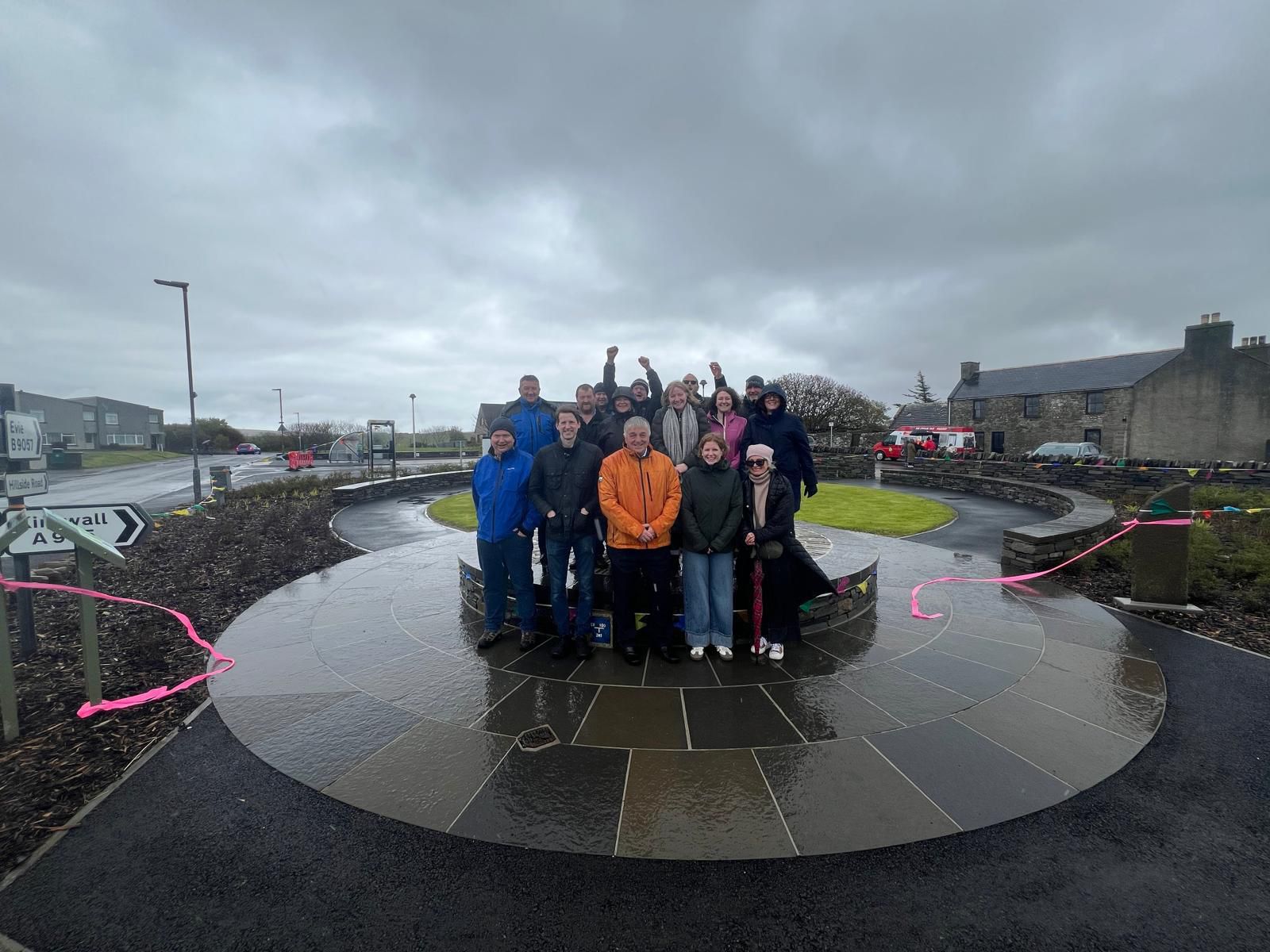
Opening of the Dounby Visitor Infrastructure project, Orkney. Credit: Orkney Islands Council
The Aberdour Silver Sands project, led by Fife Council and supported through the Rural Tourism Infrastructure Fund, delivered major improvements to visitor infrastructure, accessibility and sustainability at the site. The project received a £750,000 RTIF award as part of total project income of £1.58 million, with additional support from the Place Based Investment Fund, UKSPF, Active Travel and PAMIS.
Although delivery was delayed due to additional time required for the toilet refit, Changing Places toilet installation and associated path works, the project progressed in line with the approved application. It has upgraded car parking, toilet provision, beach access, paths and visitor management facilities. Key outputs exceeded several original targets, including 196 car parking spaces, 21 accessible spaces, 9 motorhome spaces, 15 cycle racks and 1km of footpath/shared cycle path.
Accessibility was a central achievement, with a Changing Places toilet, accessible paths, boardwalks to the beach, enhanced blue badge parking and a planned beach wheelchair scheme. Environmental and responsible tourism benefits include recycling bins, reduced congestion, better visitor management, EV charging points, solar-powered equipment and measures to reduce coastal erosion.
Ongoing maintenance will be managed by Fife Coast & Countryside Trust and Fife Council, with parking income reinvested in the site.
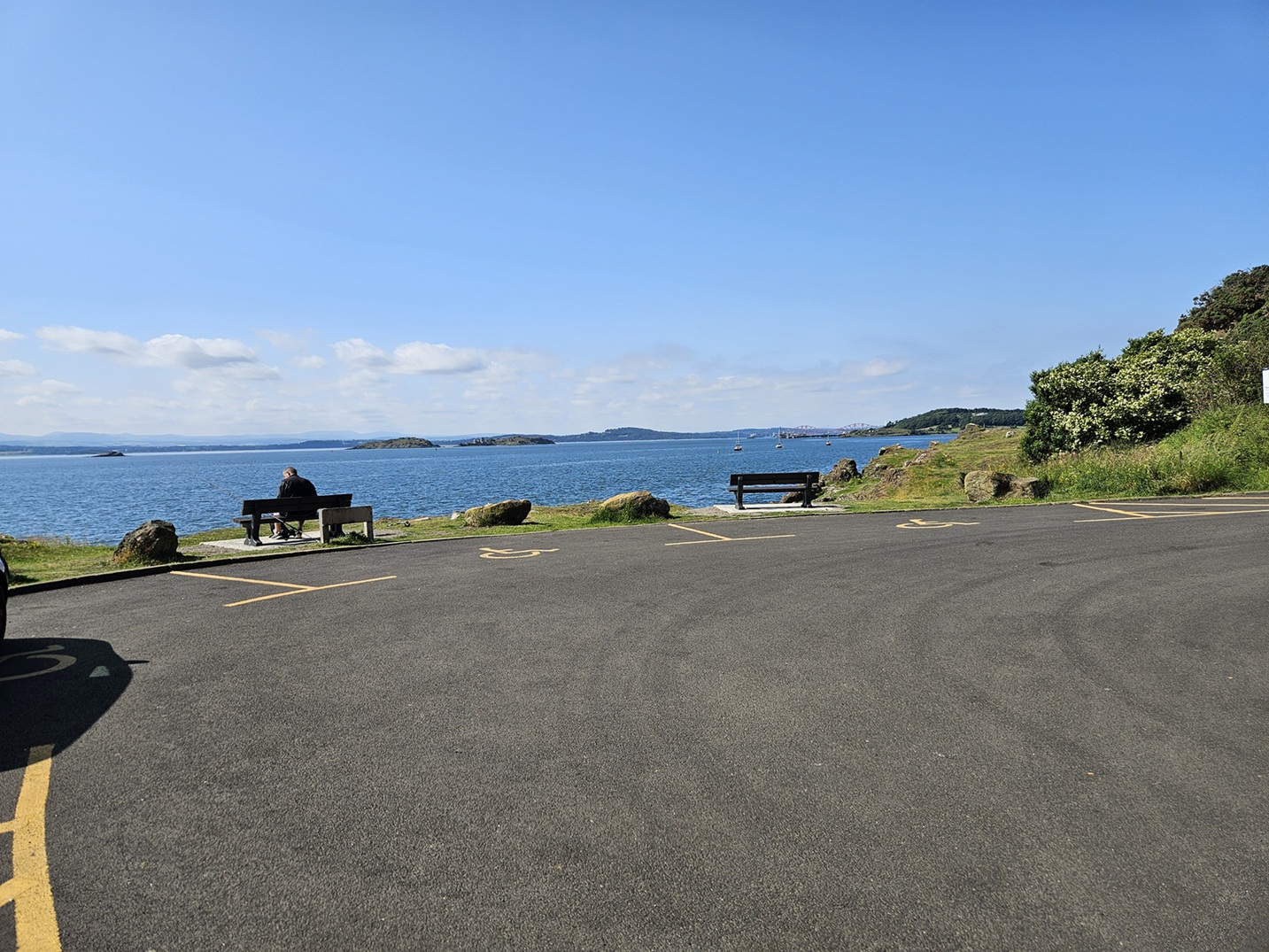
Accessible parking at Aberdour Silver Sands, Fife. Credit: Fife Council